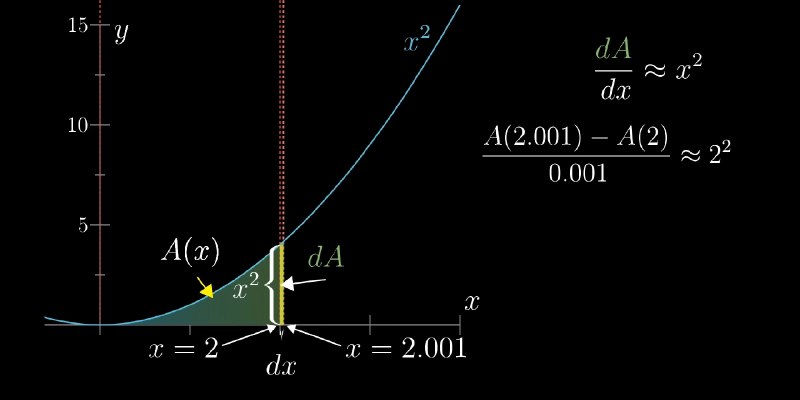
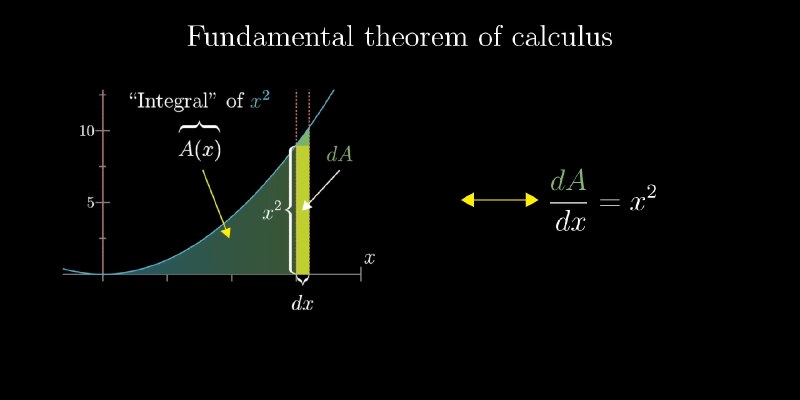
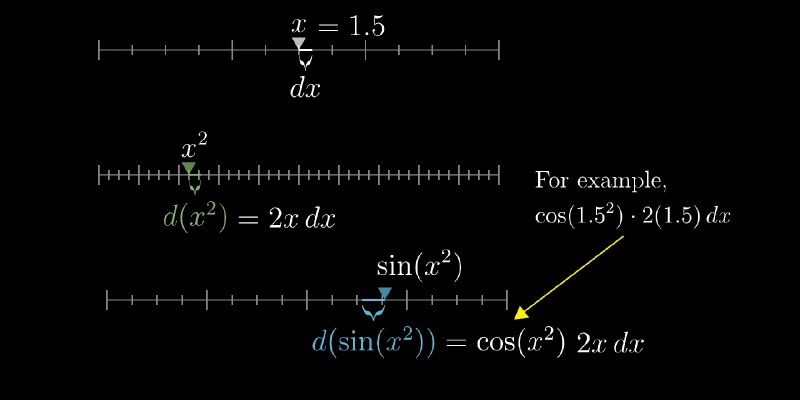
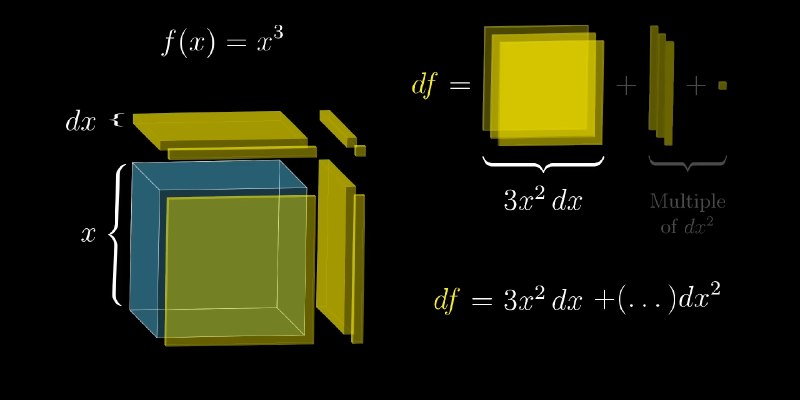
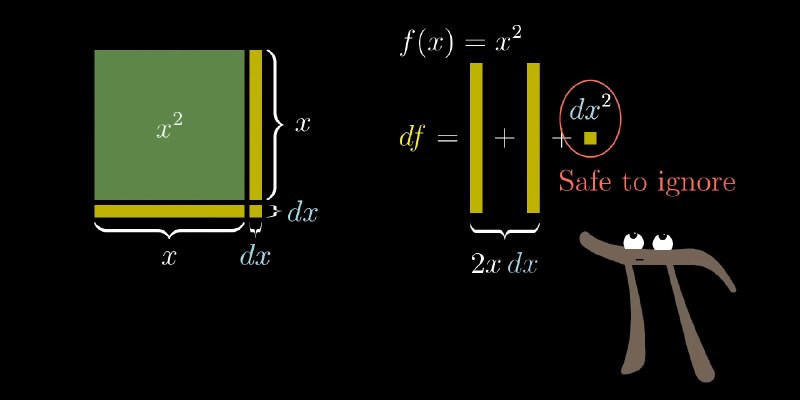
00:19 · 30 May 2026 · Sat × D(x²) = 2xdx + dx² (ignored)(xdx is the area of the small rectangle, 2 coz two rectangles)df = 2xdxdf/dx = 2x
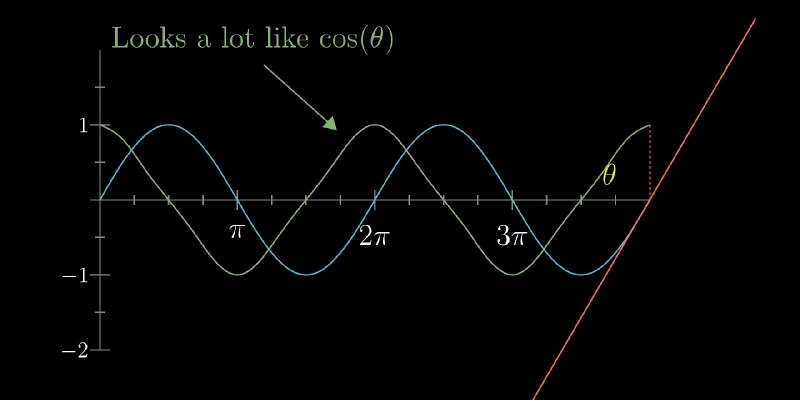
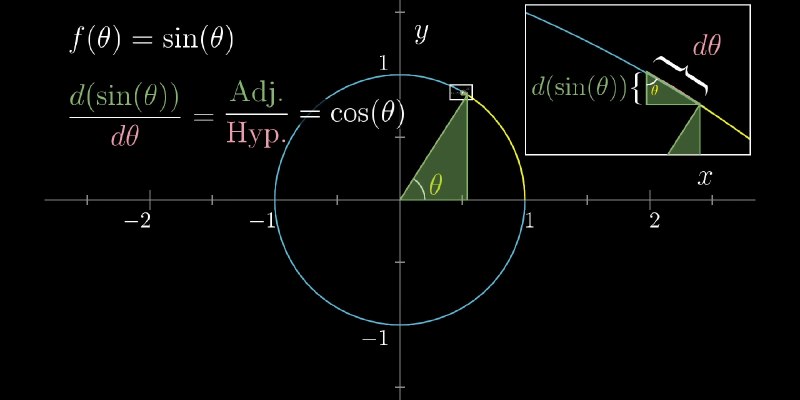
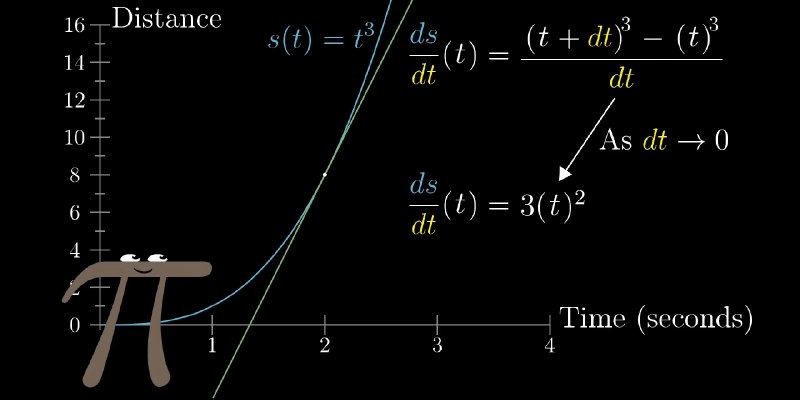
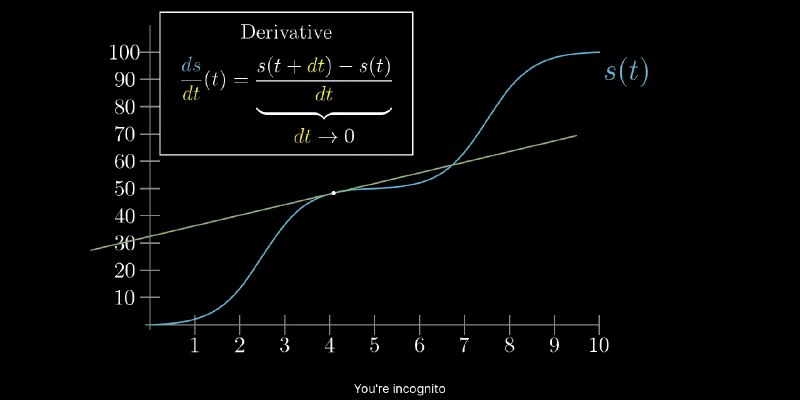
00:00 · 30 May 2026 · Sat Keub In pure math, the derivation is not this ratio d(s)/d(t) (t) for a specific choice of dt (=0.001). Instead, it's whatever that ratio approaches, as your choice for dt approaches 0. × It is equal to the slope of the line tangent to the graph at a *single* point.
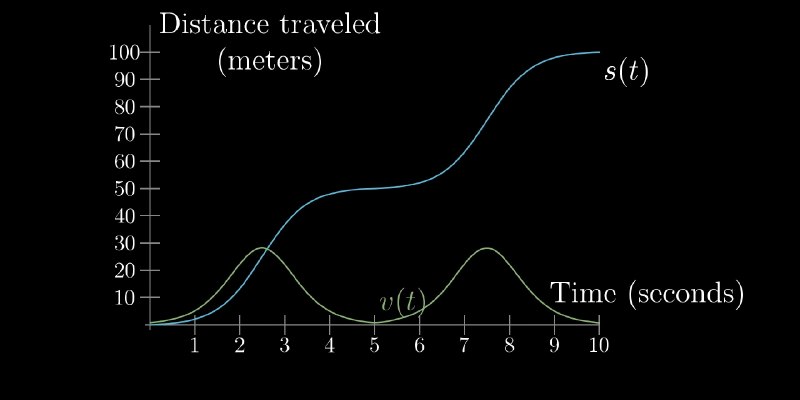
23:57 · 29 May 2026 · Fri Keub Ese. The difference of distance traveled at time t [s(t)] and a small time dt [s(t+dt)] by change in time d(t). In pure math, the derivation is not this ratio d(s)/d(t) (t) for a specific choice of dt (=0.001). Instead, it's whatever that ratio approaches, as your choice for dt approaches 0.
23:51 · 29 May 2026 · Fri Keub How does velocity depend on a distance vs time function. × Ese. The difference of distance traveled at time t [s(t)] and a small time dt [s(t+dt)] by change in time d(t).
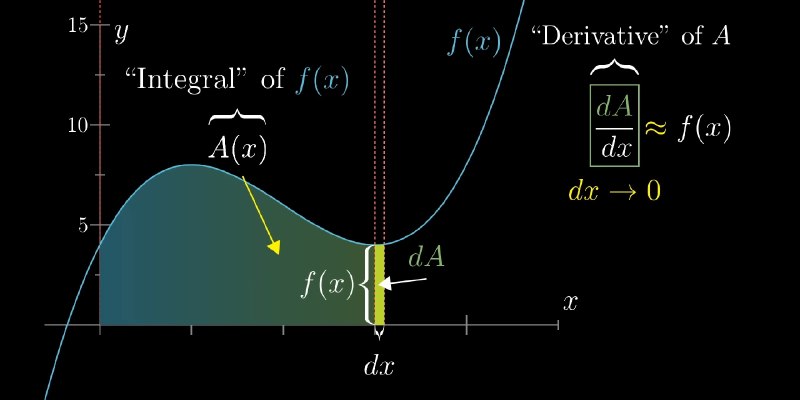
23:33 · 29 May 2026 · Fri × × × the Derivative of the Area (which is Integral) gives the Function. and the Integral of the Function gives the Area.
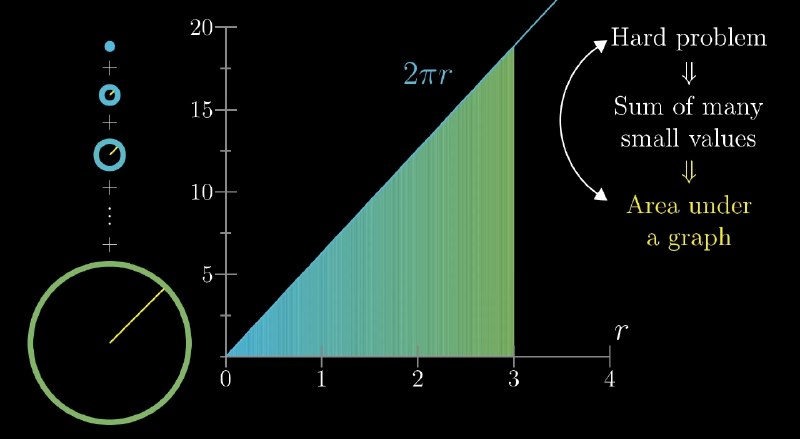
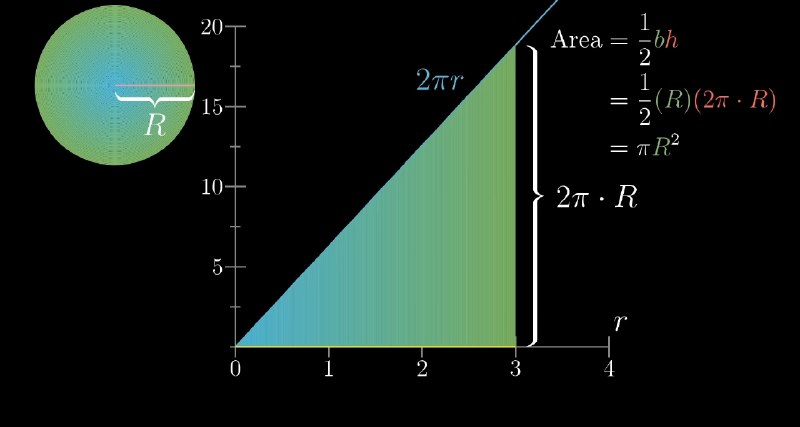
23:20 · 29 May 2026 · Fri Keub Area of circle came from area of triangle. 😲 Which started from adding circumference (2πr) of smaller circles

![Ese. The difference of distance traveled at time t [s(t)] and a small time dt [s(t+dt)] by change in time d(t).](/static/https://cdn5.telesco.pe/file/jt5PoRfuzN8BAso_xv7lWKOvq0c1klB-rF9p_3IbBnI9jR2HsgGqnk6HTSsb7RmOAiZC-b4jWHC7S7B10CVB9BN8F32NmJ7E6G12x9xB3T_ZnfC9lIty8MxLplg4E_pc5y8SsB0h4wT0I80ZL6HOywZUdAAyzm7-z7iI_ZJhl3rfPVyEHsGnhP82kjcjYqMVeyHpjJRELVopj8gjiM_fjeY0FcCRmqDZ3EuIMX-1rdUaomYNw9PgoQIa2MNQ6fpd3yTfKiBf_H29LbVzvrX3uPssJGLi2_vmCRzqPRGJsUI78dRj3IGDUmttMyohagOm76c6j5Am_bu3CKLBmsnC-w.jpg)